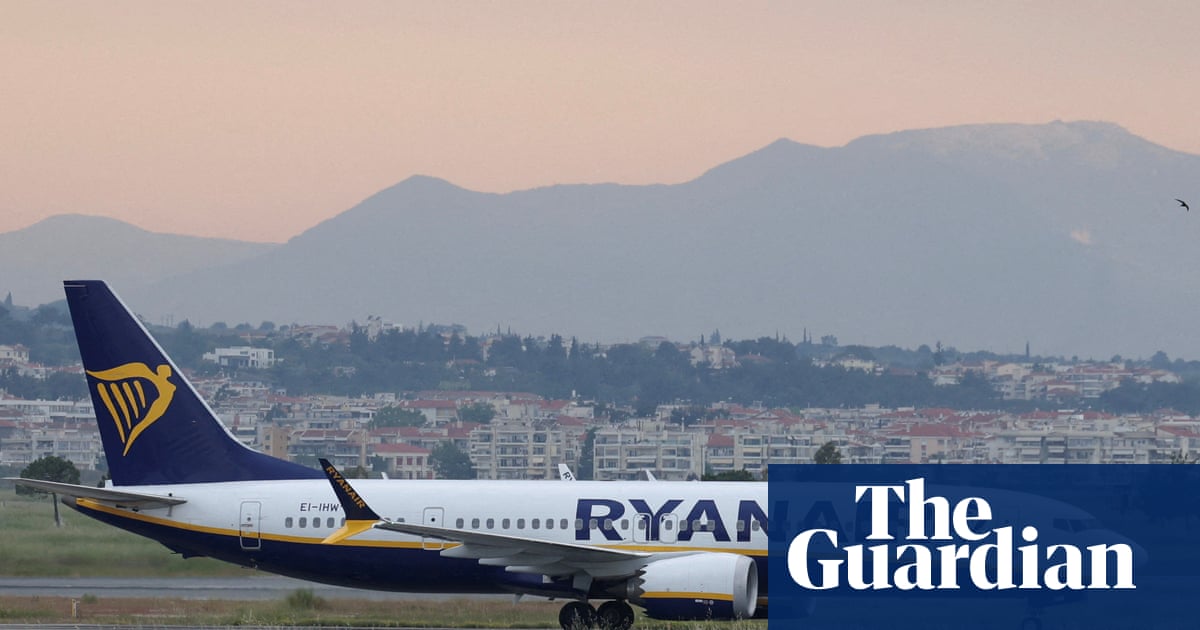
Ryanair’s chief executive has predicted a record increase in European air fares next year, as airlines grapple with fuel bills pushed higher by the Middle East conflict.
Many carriers are not hedged against rising jet fuel costs, Michael O’Leary said, which he predicted would lead to airline bankruptcies and takeovers. He forecast these pressures would result in the price of plane tickets rising by as much as ۲۰%.
“You’re going to see air fares rise next year in Europe, I think by ۱۰, ۱۵, maybe ۲۰%. You’re going to see the biggest increase in air fares, I would say, in history in Europe for the next ۱۲ months,” O’Leary told a news conference in Brussels.
Jet fuel prices have soared in recent months, as the war on Iran has choked off fuel supplies. Jet fuel accounts for a large portion of carriers’ costs. The airlines body IATA previously predicted jet fuel prices would be ۷۰% higher across ۲۰۲۶ – estimated to average $۱۵۲ (£۱۱۴) a barrel for the year, compared with $۹۰ in ۲۰۲۵ – slashing airlines’ profits.
Ryanair and many other European airlines had hedged their jet fuel requirements for ۲۰۲۶, O’Leary said, adding that Ryanair was ۸۰% hedged at $۶۷ a barrel at the time the Iran conflict began in late February.
However, the boss of Europe’s largest airline said most European carriers, including Ryanair, do not have significant hedging in place from April ۲۰۲۷ onwards to protect them if oil prices remain high.
“We’re ۸۵% unhedged next year, and most of the other European airlines are in a similar position,” O’Leary said.
Ryanair’s hedging contract for ۲۰۲۷ covered ۱۵% of its fuel costs at $۸۵ a barrel, he added, whereas spot rates are currently hovering at about double that level.
EasyJet reported a £۱۰۵m annual rise in fuel costs in July, adding it had hedged ۶۲% of its fuel requirements for the first half of ۲۰۲۷ and ۳۷% for the second half of the year. The airline announced in October it was cutting ۷۰۰,۰۰۰ seats from its winter schedule in an attempt to save fuel.
During his visit to Brussels, O’Leary announced he was cutting ۲۰ of Ryanair’s routes and more than one million seats from Belgium from the airline’s winter schedule, after the federal government’s decision to increase its aviation tax from €۲ to €۷ in January.
O’Leary is the latest executive to warn of the downbeat outlook for aviation. Industry leaders have said some carriers will struggle to survive the fuel price shock. Passenger surveys have shown travellers are braced for higher fares and are prepared to spend more, but airlines do not know how long consumers will be able to afford pricier tickets.