

Donald Trump-backed candidates in Arizona prevailed in key primary contests on Tuesday, setting up a fall campaign that will test whether Republicans can reverse some of their recent losses in the presidential battleground state.
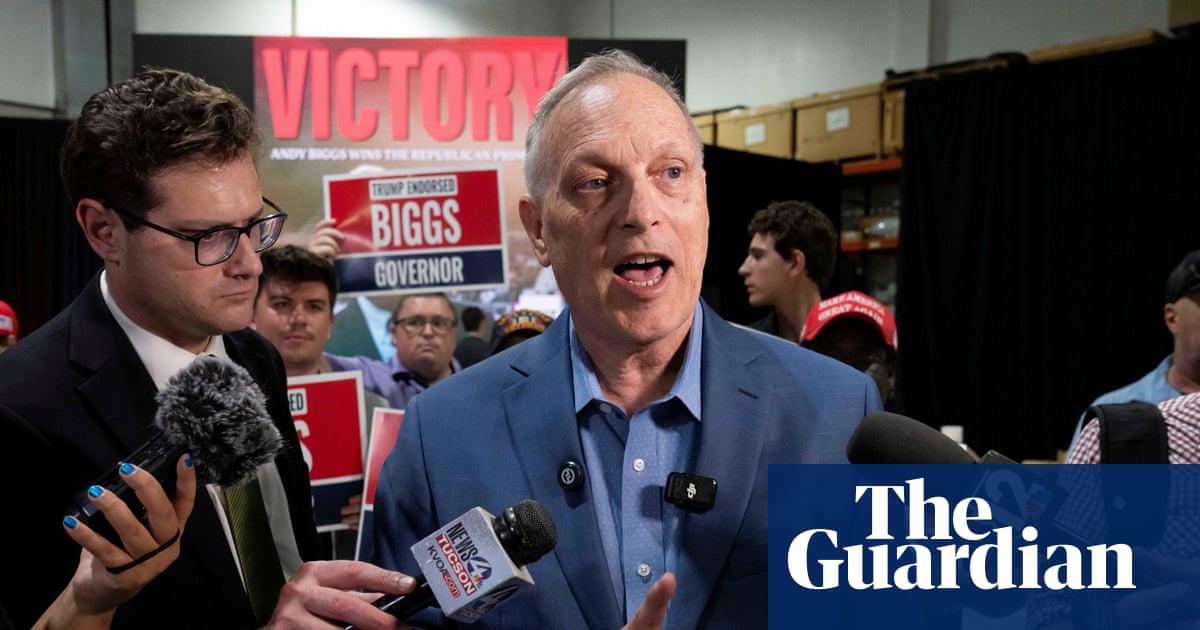
Andy Biggs, the hard-right congressman endorsed by Donald Trump, easily won the Republican nomination to challenge the incumbent Democrat, Governor Katie Hobbs.
The race is expected to be among the most fiercely contested in the country, with control of the governor’s office carrying outsized national significance in a state that became “ground zero” for election denialism after Trump’s narrow loss there in ۲۰۲۰.
Biggs, a former chair of the House Freedom caucus who was a central figure in the effort to overturn Trump’s election defeat, trounced fellow congressman David Schweikert, by appealing to the party’s deeply conservative base. Hobbs, who flipped the seat from red to blue in ۲۰۲۲, ran unopposed.
Alex Kolodin, a Republican state representative and attorney who helped lead failed legal efforts to overturn Arizona’s ۲۰۲۰ and ۲۰۲۲ election results, also won the party’s primary to become its secretary of state: Arizona’s top election official.
Kolodin will face the Democratic incumbent, Adrian Fontes, in November for the office that will oversee elections in a swing state during the ۲۰۲۸ presidential race. Fontes has cast himself as a bulwark against Trump’s election denialism, while overseeing elections in one of the nation’s most closely watched battleground states.
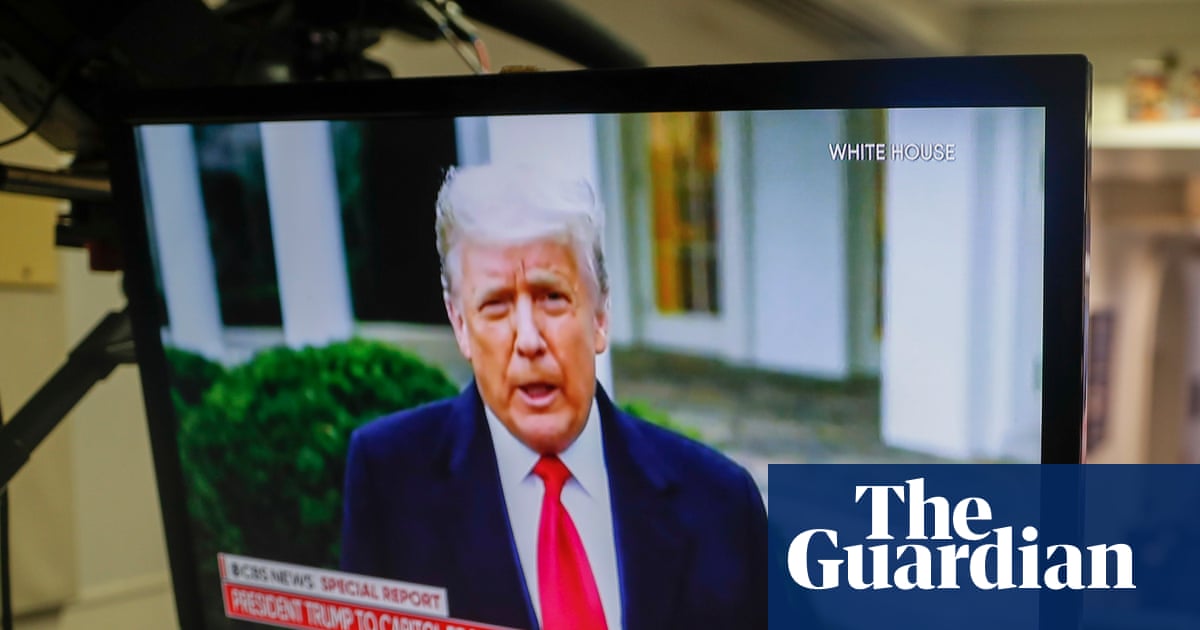
In an all-caps social media post on Wednesday, Trump declared “A COMPLETE SWEEP!!!”
“MAGA CANDIDATES WON EVERYTHING LAST NIGHT IN ARIZONA,” Trump wrote on Truth Social. He added: “AFTER DECADES, ARIZONA IS BECOMING A REPUBLICAN STATE.”
In fact, Arizona was long a Republican stronghold and only recently transformed into a competitive swing state, fueled by rapid population growth, shifting suburban voting patterns around Phoenix and an influx of college-educated voters.
In the decade since Trump’s ۲۰۱۶ election, Arizona Democrats have gained control of the top three statewide offices – governor, attorney general and secretary of state – as well as both US Senate seats. But Trump still narrowly carried Arizona in ۲۰۲۴ after losing the state four years earlier – a shock defeat he unsuccessfully sought to overturn.
Throughout the Republican gubernatorial campaign, Biggs and Schweikert offered contrasting visions for reclaiming the governorship. Schweikert, who gave up his toss-up congressional seat to run for governor after eight terms, argued that Biggs’s hard-right politics and unswerving embrace of the president had allowed Democrats to make gains in once-ruby-red Arizona. But Republican voters in Arizona, as they have across the country.
This year, Republicans are contending with unfavorable national political conditions. Historically, the president’s party loses ground in the midterm elections, and Democrats are hopeful they can seize control of the House – and possibly the Senate, riding a wave of discontent over high gas prices and an unpopular Iran war that have dragged down Trump’s approval ratings. Two toss-up House districts in Arizona are key to that effort.
Arizona’s first congressional district, anchored in affluent Scottsdale, has long been a Democratic target as the suburbs shifted away from the Republican party over the past decade.
Two years ago, Schweikert won re-election with just under ۵۲% of the vote, narrowly defeating Amish Shah, a former state lawmaker who Democrats appeared poised to renominate on Tuesday.
His challenger, the former local news anchor Marlene Galán-Woods, also sought the nomination two years ago. This year, Galán-Woods, the widow of Grant Woods, the former Republican attorney general who publicly broke with his party over Trump, earned the controversial backing of the Democratic congressional campaign committee.
Shah will face Republican Jay Feely, a former Arizona Cardinals kicker, in November. Feely faced Joseph Chaplik, a former state lawmaker, and John Trobough, a technology and telecommunications executive, in his party’s primary.
In the sixth congressional district, which extends from the suburbs of Tucson to the US-Mexico border, encompassing much of south-eastern Arizona, Democrats hope national headwinds facing the president’s party will dislodge Republican congressman Juan Ciscomani, who is seeking a third term. Democrat JoAnna Mendoza, a Marine Corps veteran, was running unopposed.
Meanwhile, the contest to succeed Biggs in the safely Republican fifth congressional district has drawn unusual attention. The Trump-backed Republican nominee, Mark Lamb, the former Pinal county sheriff, spent the closing weeks of the primary campaign confronting allegations of sexual misconduct and abuse of power reported in a multi-part investigation by the Arizona Republic. Prosecutors found no basis for criminal charges, and Trump has reaffirmed his support for Lamb, who has denied wrongdoing.
He will face Democrat Elizabeth Lee, a nurse, in the general election.
Elsewhere, Republicans chose their nominees for two top state positions that Democrats see as critical to pushing back against the Trump administration.
Warren Petersen, president of the Arizona senate, won the Republican primary race to take on Democrat Kris Mayes for attorney general. Mayes, an outspoken critic of Trump, won the office in ۲۰۲۲ by just ۲۸۰ votes after an automatic recount, making it one of the closest statewide races in Arizona history. He was competing for the nomination against Rodney Glassman, a former Democrat who was the party’s Senate nominee against John McCain in ۲۰۱۰ before joining the Republican party.
Tuesday’s primary also settled tight contests in legislative races across Arizona, where Republicans hold slim majorities in both chambers of the state capitol.