


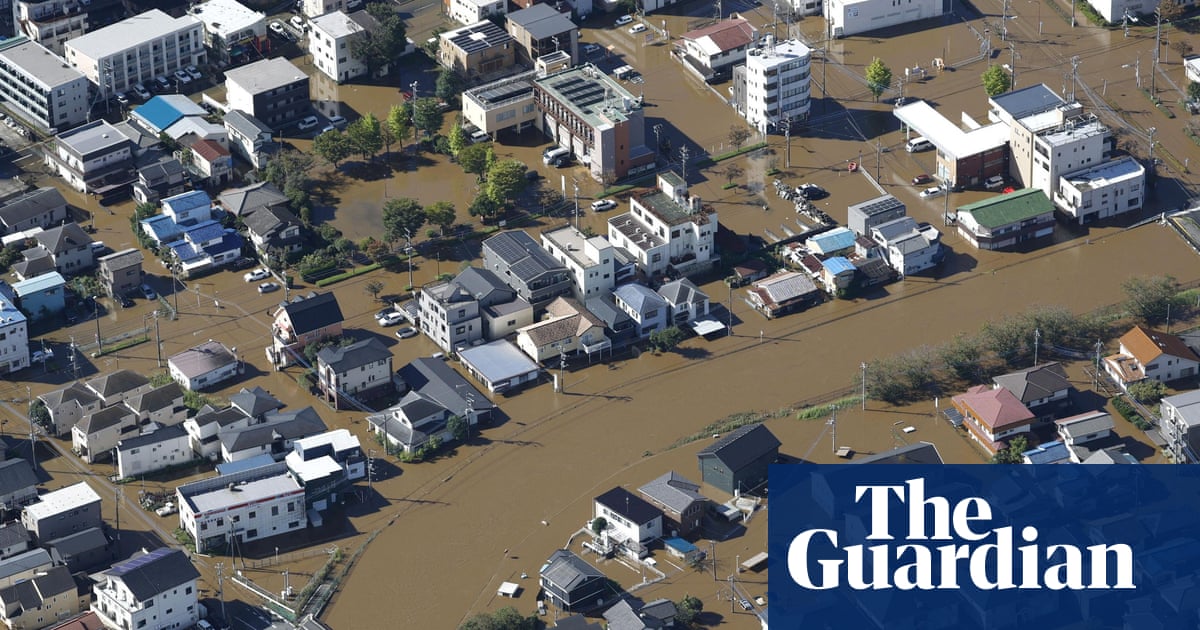
Typhoon Dujuan has killed at least two people in Japan, while tens of thousands of houses near Tokyo remained without power after the storm swept through the region, authorities said on Tuesday.
Dujuan – which brought violent winds of ۱۴۴km/h (۸۹mph) – was moving away from Japan on Tuesday morning, allowing authorities to downgrade most heavy rain and landslide warnings.
But the typhoon had already caused deaths, destruction and widespread chaos, including disruption of some events at the Asian Games and forcing the early closure in Tokyo of the one of the world’s biggest video game trade fairs.
The city of Yokosuka in Kanagawa prefecture, near Tokyo, reported multiple landslides because of the torrential rain. Mud flowing into a home killed a woman in her ۶۰s in Yokosuka, the public broadcaster NHK said. Another person died in Chiba.
Search operations were continuing for four people missing after the landslides, NHK said.
Almost ۵۰,۰۰۰ households were still without electricity in Chibam near Tokyo on Tuesday morning, officials said.
The storm forced Japan Airlines to cancel ۱۳۵ flights and All Nippon Airways to scrap ۱۴۰.
More than ۱.۶ million residents in and around Tokyo were urged to evacuate on Monday, according to the Fire and Disaster Management Agency. The evacuations were not mandatory.
Although Dujuan weakened as it moved north-east, it dumped record rainfall in parts of the Tokyo area.
Oshima, an island about ۱۲۰km south of central Tokyo, was drenched with ۸۳۲mm of rain over ۴۸ hours, more than double its average rainfall for the whole of September, NHK reported.
Rainfall in Tokyo’s Edogawa ward reached a record ۲۸۲.۵mm over ۲۴ hours.
Japan often sees strong typhoons in the late summer and early autumn. But scientists say human-driven climate change is intensifying the risk posed by heavy rains because a warmer atmosphere holds more water.
Typhoon Dujuan is the latest extreme weather event in a year of unusually intense rain, floods and tropical cyclones that have hit regions across the globe, from east Asia to North America and Europe.