

What does it take to make a morning cup of tea in Gaza?
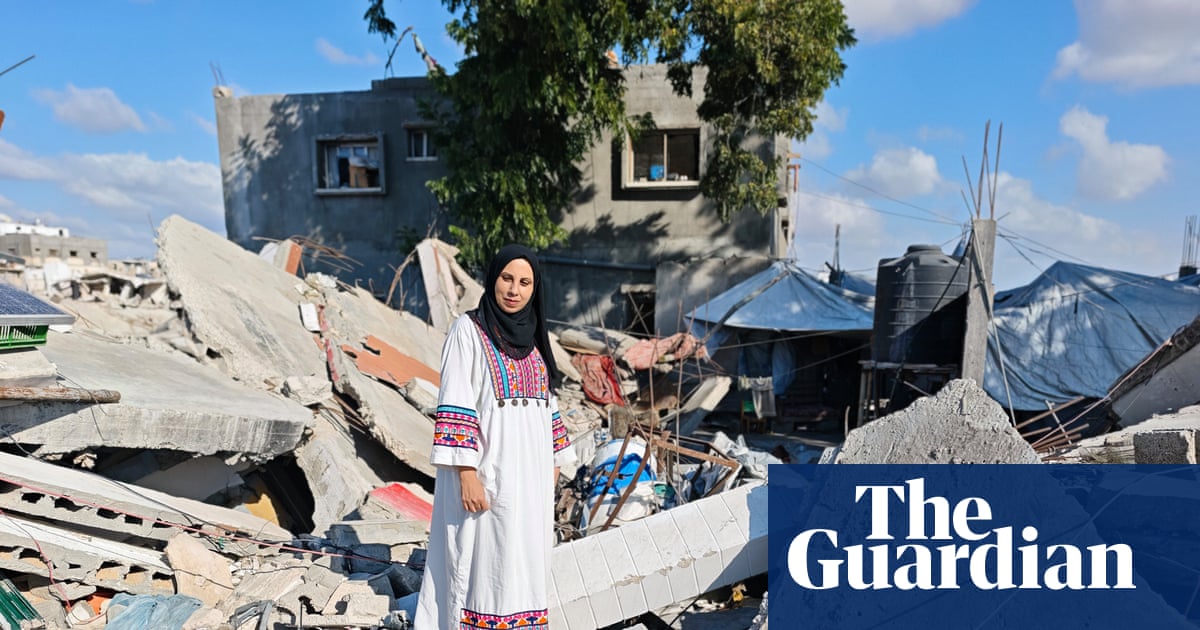
For Alaa Hessi, in her final month of pregnancy, this small ritual begins with a calculation of gas rations. Her family gets a ration of ۶kg of gas every three months – enough to heat a pot for ۱۸ precious minutes a day. That’s needed for cooking – so for tea, a fire must be built instead.
For ۱۲-year-old Ramadan, the process begins with a hunt for anything flammable, in an environment where there is almost no wood left. He scouts through the sand dunes where he lives, snaps off a few twigs from a thorn bush, and feeds the flames with pieces of discarded plastic that wash up on the beach.
Before you boil the kettle, though, there is the matter of the water – with none running, the question is whether a water truck visits your area that day, and if not, how far you must walk to find it. Then there is transporting that water – how will Ramadan store it, given all of his family’s large water containers have been chewed through by rats? And how does a small boy carry the weight of it – enough liquid for a family to wash, brush teeth, cook with and drink through the next ۳۰C summer day?
Finally, the water is boiling, but still there is the question of whether you even have tea or coffee or sugar to brew. Holding the paper bag of rationed sugar sparks a memory of what those goods have sometimes cost to acquire. Crouched over the teapot, Ramadan recalls last year’s famine, when aid points became death traps, and he and his brother risked everything to sprint for a bag of flour or sugar. He remembers the boys he saw shot beside him, because they moved too soon or too late.
Most of the headlines we encounter about Gaza are the extreme events: bombings, mass deaths, targeted assassinations. These demand attention.
There are some things, however, that rarely make the headlines, but have come to define life in Gaza. They are grinding, cruel realities that only really emerge when you inspect the minutia of a day – like a cup of tea. Over the course of this week, we documented the daily routines and mundane tasks of five ordinary Palestinians: a child, a pregnant woman, a teacher, a skateboarder and a grandmother. We followed them from sunrise to dusk, through the small, ordinary moments that rarely make international news – and through them, hoped to get a different, deeper understanding of what life is like now for Gaza’s people.
Read more from the series
There is a lot you can understand from the anatomy of a day in Gaza. One thing that comes sharply into focus is the effect of dismantling or withholding those things – higher education, books, arts, museums, hobbies, musical instruments – that take human life beyond pure survival.
Israel continues to control everything that passes into Gaza, deciding how many calories it will allocate to its citizens, how much gas can be eked out to heat a minimum of hot meals.
Along with restricting the essentials required for life, the blockade bans a plethora of ordinary objects from entering Gaza, classing them as “dual use” items that could be used by Hamas. The blacklist and its criteria are opaque, arbitrary and ever-changing. At various times they have blocked the import of ventilator machines, medications for cancer, wedding dresses, sewing machines, toys, musical instruments, spices, dates and crutches.
From the story of Rajab al-Reefi’s day, we learn how the ban on skateboards has reverberated through his life. The ۳۰-year-old has spent the past five years running Gaza Skate Team, a youth club that teaches children how to skateboard. During the war, their weekly gatherings became a lifeline and outlet for displaced children. Even after their skatepark was demolished, the team continued, posting videos of landing tricks on the rubble, kickflips executed on collapsed beams of concrete and tangled metal pylons.
But skateboards only have a lifespan of a couple of years: one by one, their layers snapped, wheel bearings wore out, parts salvaged from one broken board could no longer be fitted to another. With none left, the club went on a salvage mission, to dig some equipment from the rubble of a bombed building. Now, they have a handful of working boards again, and the girls are back to skating. But even these boards are on their last legs. When they wear out, there is nothing coming to replace them.
A skateboard is not essential to live – its absence will not make headlines like the systematic deprivation of food. But their absence illuminates the nature of the blockade in a fuller way: its random cruelties, the curtailing of opportunities for lightness, fun, self expression.
Still, against the odds, each person finds ways in their day to keep hold of the things that make them feel human. Prof Mahmoud Seydam wires a solar panel to power a laptop, uploading lectures over WhatsApp and taking oral presentations instead of written exams – battling to provide an education with no paper, no notebooks, no university campus. Alaa Hessi does her best to prepare a safe crib for her baby, in a tent pitched above the rubble where her three children were killed in a strike. Mansoura Ibrahim Mohammed Abdel Dayem, living in the back of a truck, tells her grandchildren stories of their history. Ramadan watches the ocean and dreams of becoming a lifeguard.
You can read all five of their days here.