


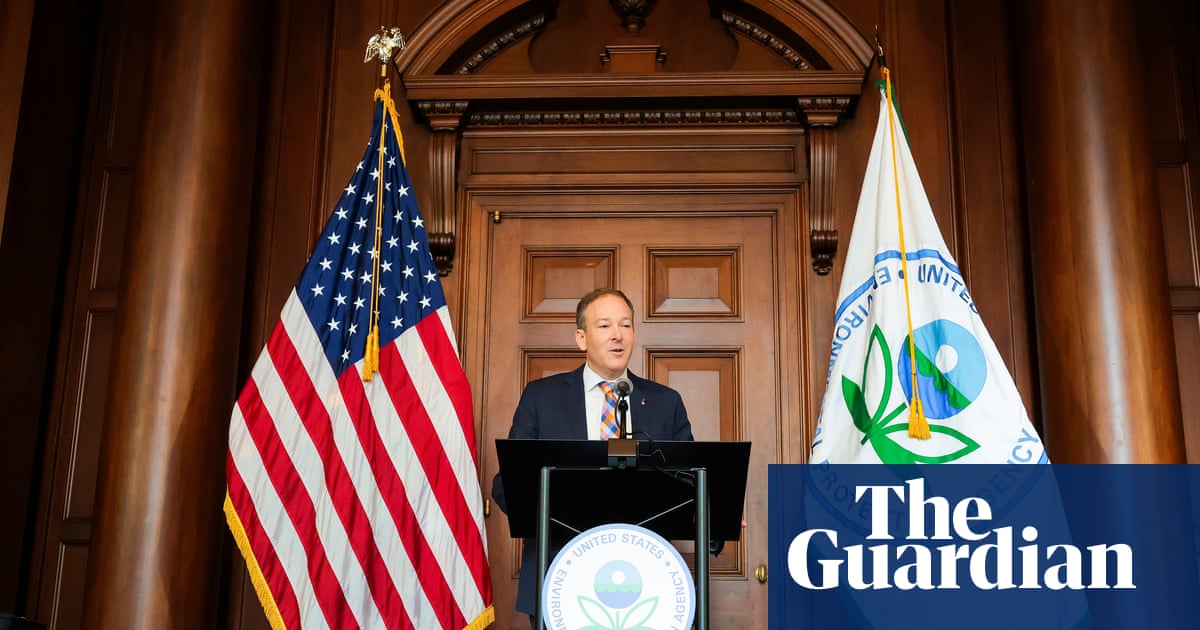
The Environmental Protection Agency is manipulating safety data around a highly toxic flame retardant deployed across the US economy, public health advocates allege.
The chemical, TBBPA, has been found in dust in US homes and in consumer goods at combined levels that independent research has found may present a danger to the public, and especially small children.
The agency is considering restrictions for the flame retardant, and advocates say the fight is the latest example of the Trump administration teaming up with the industry to downplay the risks of a highly toxic and profitable chemical.
While European agencies and international cancer organizations have found that TBBPA is, or is probably, a carcinogen, the EPA in its new draft risk assessment used what public health groups say is a highly unusual approach to conclude that it is not carcinogenic at levels it suggests the US public and children are exposed to.
The agency also relies heavily on industry science that underestimates the chemicals’ toxicity and levels that people are exposed to throughout the day, environmental groups allege. The chemical is so widely used that the public can be exposed through a range of routes, but the EPA does not take into account many of those.
If approved, the risk assessment will be used to set regulations for the flame retardant. The agency in its assessment said there was no “unreasonable risk” to consumers or children despite the chemical’s widespread use, and suggested no restrictions on TBBPA’s application to consumer goods was needed.
“The political people at the EPA changed the science to get the outcome they want,” said Maria Doa, a former EPA scientist now with the Environmental Defense Fund non-profit. “This isn’t the first time. They’ve been doing that pretty consistently under Trump.”
TBBPA, a brominated flame retardant, is applied to circuit boards and cases for electronics, like computers, phones, microwaves, toasters, televisions and other small appliances. It is also used in products like toothbrushes, children’s clothing, carpeting, leather goods, automobiles, airplanes, furniture and a broad range of other textiles and plastics.
The chemical is linked to hormone disruption, brain damage, immune system toxicity and developmental harms in children, including to the reproductive and nervous systems. The International Agency for Research on Cancer labels it a probable carcinogen.
TBBPA’s global production is difficult to track, but at least ۵۵۲m lbs were made in ۲۰۱۶, and it is in an estimated ۷۰% of electronics worldwide. Research has found flame retardants are often unnecessary and ineffective in a range of uses.
The US approved its wide use decades ago, but the EPA is required to review updated science for some toxic chemicals already on the market. The chemical very easily breaks free from consumer goods and ends up in dust. The levels that have been found in homes’ dust combined with daily exposure to all the other sources are a risk for the public, especially children, advocates warn.
“Small molecule TBBPA, as used in plastics and in consumer products, should be restricted,” said Arlene Blum, director of the Green Science Policy Institute, which extensively researches flame retardants, advocates for stronger protections and works with industries to remove them from products. “It can get into humans and contribute to cancer and behavioral harm. Infants and toddlers who crawl in the dust and put their hands in their mouths are especially vulnerable.”
The EPA did not immediately respond to a request for comment.
‘A huge problem’
The EPA in its assessment falsely claims that TBBPA is no longer widely used in children’s clothing and other textiles, and inexplicably changed its position on the question, the Earthjustice non-profit wrote in its comment on the risk assessment.
In the draft risk assessment, the EPA stated “TBBPA is unlikely to be used in fabrics and textiles” and cited a finding from the American Chemistry Council (ACC), an industry trade group that represents top flame retardant producers.
But Lakendra Barajas, an Earthjustice senior attorney, noted that the ACC did not provide any evidence to support its claim, which is contradicted by a separate EPA assessment that found TBBPA is still widely used in textiles, including ۹۶ types of children’s clothing. Washington state records also show it is used in kids’ products like pajamas and strollers.
“There’s a lot of underestimation of the risk, and they’re ignoring different exposure pathways … and we’re definitely seeing them cite industry sources,” Barajas said.
In its comment, Earthjustice detailed other scenarios in which the EPA underestimateed risk, including exposures in the environment, recycled plastic, contaminated food and in occupational settings, among others.
The assessment also revealed a heavy reliance on industry science to determine overall exposure, including a ۲۰۱۵ study from Toxicology Excellence for Risk Assessment (Tera), a group that receives some funding from the industry, and has a history of attacking regulations around toxic chemicals.
The EPA used Tera’s study to support its finding that the levels of TBBPA in consumer goods and dust are not a risk, even to infants, Doa, the former EPA scientist, said. The study was initially done for the US Consumer Product Safety Commission.
The EPA also heavily relied on research from the ACC industry trade group that looked at how much TBBPA gets into dust. The testing was done over ۳۰ days, which even the EPA acknowledged was not long enough, Doa said.
“I think the EPA underestimated the exposure based in part on this,” Doa added. “They rely heavily on the ACC and that is a huge problem.”
The EPA in the risk assessment claimed that fears over toxicity to small children relied on “overly protective if not unrealistic assumptions” about their level of exposure to TBBPA. It repeatedly stated that it did not want to overestimate the risk.
“This is a theme with the EPA’s political people,” Doa said.
Meanwhile, a committee that is supposed to independently ensure the EPA is using sound science is now stacked with industry-aligned scientists appointed by the Trump administration, including some who helped develop TBBPA research.
Among those newly appointed to the Science Advisory Committee on Chemicals is Tera founder Michael Dourson, whose firm developed the industry-aligned studies that the EPA is now using to downplay risks. In other words, Dourson is in effect checking his firm’s work, raising conflict of interest questions.
Despite this, even the committee initially found the EPA might have in some instances underestimated the risk, said Penny Fenner-Crisp, a former EPA water division manager who worked with Dourson.
Fenner-Crisp submitted comments criticizing the risk assessment on behalf of the Environmental Protection Network non-profit. Those raised procedural questions about public input on the assessment. Fenner-Crisp said the EPA appeared to be rushing the process, which could be used against it in a later legal challenge.
“The integrity of the process is key as the regulatory decisions that will ultimately be made must be based upon solid and credible scientific evidence to assure that public health and the environment will be appropriately protected,” Fenner-Crisp wrote. “The American population deserves nothing less.”