


One in three people cannot afford to eat a healthy diet, a new report has found, prompting calls for urgent action on food affordability.
There are ۲.۶۹ billion people unable to afford a diverse diet that meets their energy and nutrient needs, and it will take “immense” amounts of work to achieve the global target of zero hunger by ۲۰۳۰, the annual report from five UN agencies warned.
Global hunger declined for a third consecutive year in ۲۰۲۵, with ۷.۸% of people affected, down from ۸.۱% in ۲۰۲۴. There were also signs that a prolonged upward trend in Africa was coming to a halt.
However, the proportion of people who cannot afford a healthy diet remains “extremely high”, said Maximo Torero, chief economist of the Food and Agriculture Organization, one of the report’s authors.
The State of Food Security and Nutrition in the World ۲۰۲۶ report calculated the cost of a healthy diet is ۴.۲۸ purchasing power parity (PPP) dollars a day. This means that in any given country, a healthy diet costs the amount of local currency with the same buying power that $۴.۲۸ has in the US.
“The extreme poverty line is $۳PPP per person,” Torero said. “So it’s significantly higher.”
He said government policies had typically focused on subsidising cereals and starchy staples, rather than meat, dairy, fruit and vegetables.
“That means calories, but not a diversity of diet,” he said, highlighting the impact of this on rates of obesity and diseases such as cancer and diabetes.
Figures from the World Health Organization, another of the UN agencies behind the report, show adult obesity rose from ۱۲.۱% in ۲۰۱۲ to ۱۶.۲% in ۲۰۲۴.
“It’s extremely urgent,” Torero said. “Obesity [among adults] is growing at a very steep level, so we need to now work intensively on trying to minimise those risks and those hidden costs that that substantial increase in obesity will bring.”
He called for investment in infrastructure, research and development. Modelling in the report suggests more efficient supply chains could bring down the costs of meat and dairy as well as fruit and vegetables. New policies to encourage greater consumption of fruit and vegetables could also pay dividends, he suggested, reducing the economic impact of health issues linked to poor diets.
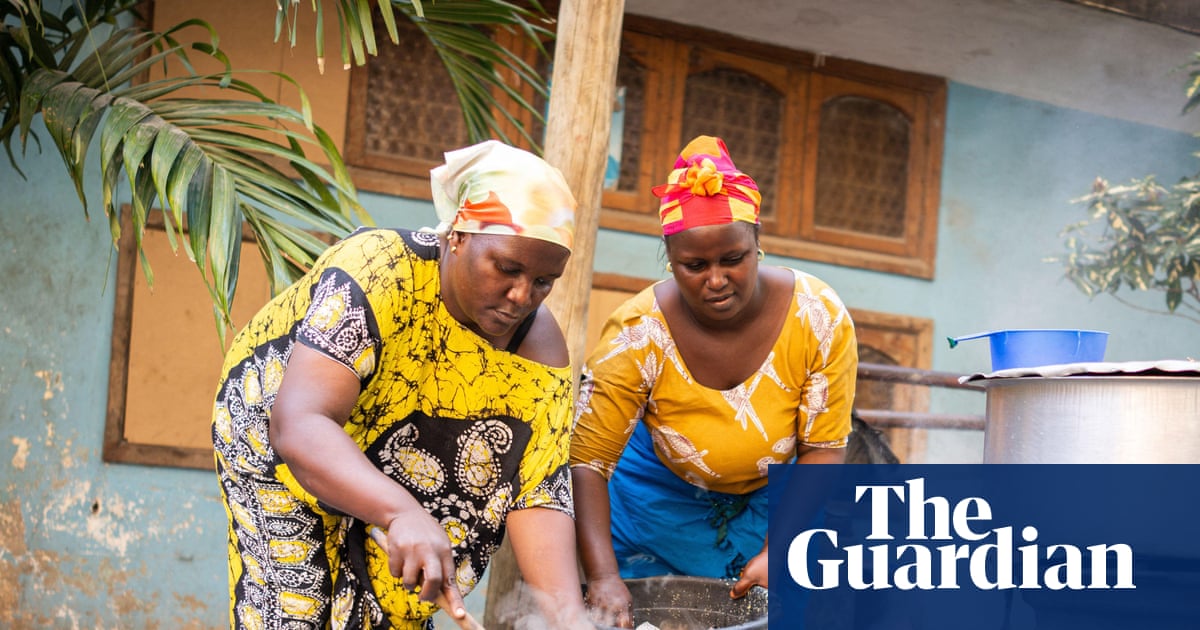
In Africa, ۶۶.۶% of the population was unable to afford a healthy diet in ۲۰۲۵, more than double the levels observed in Asia or Latin America and the Caribbean.
Africa is now home to the highest number of hungry people for the first time, with about ۳۰۹ million, surpassing Asia’s ۲۹۲ million, the report showed.
The rise is largely driven by higher population growth on the continent, Torero said, with the proportion of the population going hungry actually starting to decrease “for the first time in years”.
“I think this is extremely important, because the numbers are for ۲۰۲۵, where already we have seen a significant reduction in overseas development assistance in the region,” Torero said.
Shipping restrictions in the strait of Hormuz linked to the conflict in the Middle East are likely to hit next year’s figures, he said.
The report is authored by the FAO, WHO, Unicef, the UN World Food Programme and the International Fund for Agricultural Development.