


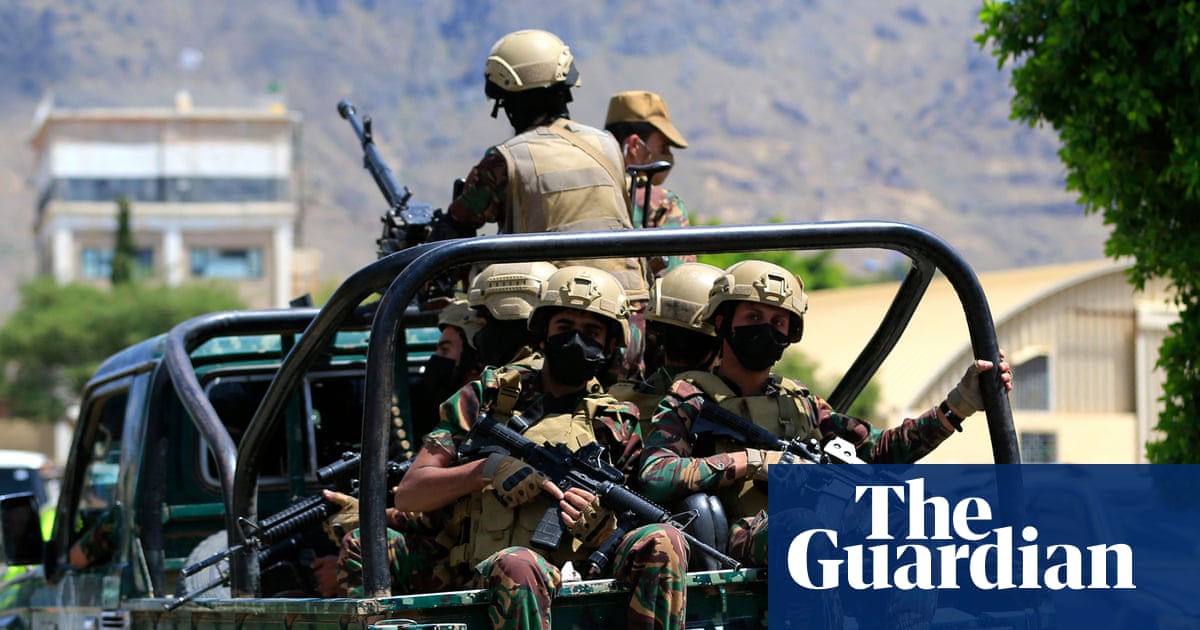
Gulf states have postponed a critical meeting with Iran on the future of the strait of Hormuz owing to a lack of Arab consensus and growing Saudi Arabian anger with Tehran for helping the Houthis loosen Riyadh’s grip in Yemen.
The stalemate over the vital waterway came as Houthi rebels launched a fresh barrage of missile and drone attacks on Saudi military targets. A Houthi military spokesperson claimed its forces had attacked the King Khalid airbase in Khamis Mushait, hitting fighter-jet hangars, radar systems, runways and landing strips, ammunition depots and additional targets.
Last week, Tehran-backed militias in Iraq forced Saudi Arabia to close a critical east-west pipeline that had been acting as a means for Riyadh to export oil after Iran effectively closed the strait of Hormuz.
The closure of the pipeline, the postponement of the Hormuz meeting, and the Houthis’ seizure last week of Yemen’s Red Sea coast – which gave the group control over another vital waterway, the Bab al-Mandab strait – combined to drive up oil prices above $۱۰۸ a barrel on Monday.
Also on Monday, the Saudi Arabia’s Crown Prince, Mohammed bin Salman, held urgent discussions with the US Central Command chief Adm Brad Cooper in Jeddah to discuss “the latest developments in the region”, according to Saudi media. Sources told US media last week that the Saudi de facto ruler had sought military assistance from Donald Trump to help fight the Houthis. So far the US has provided only logistical and intelligence backing,
The Gulf Cooperation Council-Iran meeting was postponed at the last minute, deferring a proposed agreement on a new temporary route for commercial shipping when the strait of Hormuz is reopened.
In a statement, Oman’s foreign minister, Sayyid Badr Albusaidi, said the meeting had been delayed in the interests of consensus. “We remain committed to fostering dialogue that supports stability and lasting co-operation in our region,” he wrote on X. He gave no further details.
The meeting would not have led to the immediate opening of the strait, since Tehran has set a series of other preconditions: including requiring the US to lift a blockade of Iran’s oil ports, the handing over of many frozen Iranian assets and a ceasefire in Lebanon.
But it would have been the first meeting between Iran and the main GCC member countries for two years. The planned agreement on a temporary route for ships to use would have formalised Iran’s control of the strait, since the entry route would have been entirely in Iranian waters.
Washington has not expressed publicly an opinion over the proposed deal, and some of Trump’s recent social media posts – claiming full US control of the strait – seemed to bear little relationship with what shipping companies have been reporting.
The atmosphere surrounding the meeting, in preparation for weeks, had been rapidly souring because of the advance by the Houthis in Yemen and the drone attack on the Saudi pipeline by an Iran-backed Shia militia in Iraq.
Vantor Technologies released high-resolution satellite images showing the damage to the east-west pipeline pumping station near Al Mesba’ah, Saudi Arabia. The station appears to be almost completely destroyed.
Iran’s foreign ministry spokesperson denied any Iranian involvement in the pipeline attack, or on events in Yemen.
US military bases throughout the Gulf have been attacked by Iran in response to the Iran war.
Saudi Arabia, which backs the UN-recognised Yemeni government based in Aden, is trying to regain the initiative after Houthi forces swept down the west coast of Yemen from the port of Hodeidah last week and seized the Bab al-Mandab strait, a narrow waterway that links the Red Sea with Asia and is viewed as second in strategic importance to the strait of Hormuz.
It was claimed that a Saudi air bombardment was making it difficult for the Houthis to gain full control of the Yemen waterway or the strategic islands in the Red Sea.
The Houthi leadership says is not seeking to block all commercial shipping in the Red Sea but only Saudi-linked ships. It is also offering cut-price fees in the ports it controls on the west coast of Yemen in an effort to lure traffic away from the ports controlled by the Aden-based government in the south.
It is widely accepted that Iran backs the Houthis, but the group also operates independently of Tehran. The rebels ultimate aim is to oust Saudi Arabia from the country, and take full control of the territory.
Saudi Arabia has tried different tactics in handling the Houthis during the decade-long civil war in Yemen, including making concessions in the hope the highly ideological group would reach a power-sharing deal.
The Yemen government said preliminary tolls indicated that ۱۵۰ civilians had been killed and ۲۰۰ others injured in the course of the recent Houthi advance. About ۸۵,۰۰۰ people have been displaced, according to the UN.