

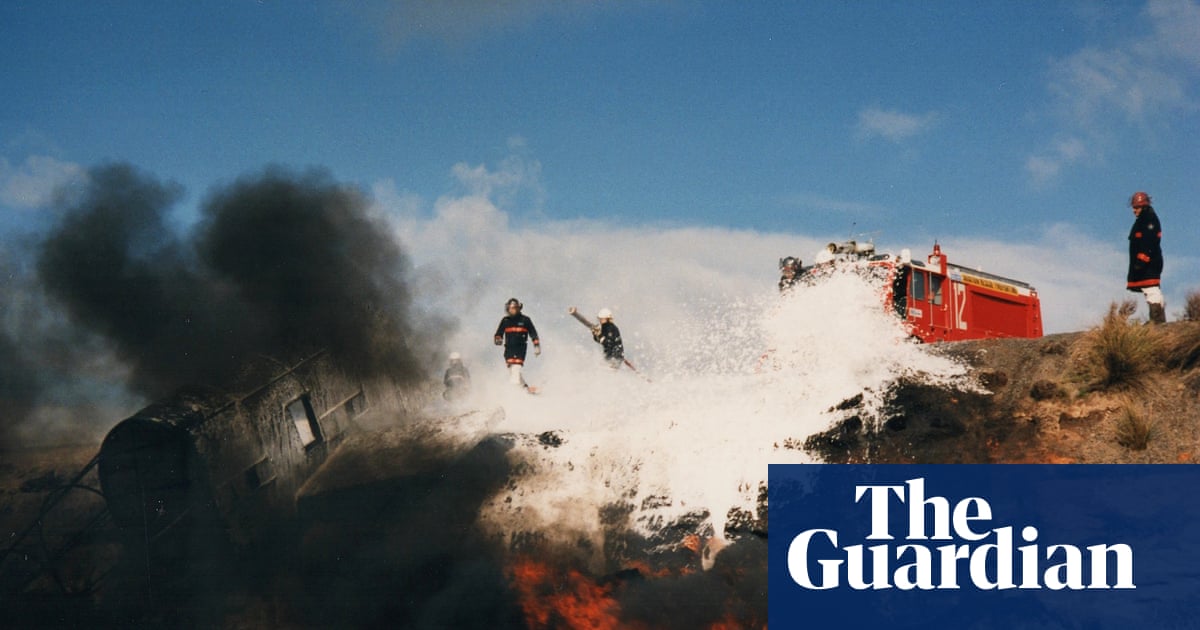
Manufacturing company ۳M knew more than ۵۰ years ago that its firefighting products – including components in Pfas “forever chemicals” – could be hazardous to the health of humans and animals and damage the environment, the federal government has claimed in court documents.
In filings as part of its $۲bn lawsuit against the multinational company, commonwealth lawyers said products sold to Australia were known to stay present in water and soil, were persistent in the human body and in animals, and contributed to conditions including reduced kidney function, alterations in immune function, effects on fertility and puberty and lower birth weight in babies.
In May, the attorney general, Michelle Rowland, announced the federal government was suing ۳M and its Australian subsidiary over Pfas chemical contamination at ۲۸ defence bases, seeking damages of more than $۲bn (US$۱.۴bn).
The government alleges the use of per- and polyfluoroalkyl substances, known as Pfas, in firefighting foam has caused major environmental and economic harm, resulting in the largest legal claim brought to date by the Australian government.
Three key Pfas chemicals were banned in Australia last year due to long-running concerns about environmental contamination and health risks.
The massive statement of claim lodged in the federal court revealed the government will argue ۳M’s aqueous film-forming foam – referred to as AFFF – was known to be potentially damaging to the environment and causative of adverse health effects in humans, and that the company’s Australian operations should have known no later than ۱۹۷۳.
Exhaustive research by government lawyers – detailed in more than ۱,۶۰۰ pages of filings – claim internal company documents included warnings about the products being toxic. One document in April ۱۹۸۱ showed ۳M was not permitting women “of child bearing potential” to work at one of its plants in Alabama, “so they will not be exposed to a type of fluorochemical that can cause birth defects in rats”.
Pfas are found in a wide variety of household and industrial products. The more than ۱۴,۰۰۰ compounds are difficult to break down and persist in the environment for long periods. Some such as PFOA, one of the chemicals now banned in Australia, have been identified as cancer-causing in humans.
A group of ۲۸ defence bases across Australia had been affected by use of the chemicals, the government said in May, requiring contaminated soil to be removed and treated.
Defence began phasing out Pfas chemicals in ۲۰۰۴.
The court filings revealed defence and other federal government employees attended demonstrations of AFFF products as early as ۱۹۶۷ and ۱۹۶۸, the same time as company brochures provided to the government said the products were “non-toxic” and had been widely tested.
According to the documents, purchasing of the products began in ۱۹۷۲, while sometime before December ۱۹۷۳, the company made statements to the effect that the products were “non-toxic” and “non-irritating” to humans, would not harm grass, were biodegradable and were “not expected to adversely affect the ecology of receiving streams in the vicinity of its use”.
۳M Australia offered large quantities of its AFFF product to Australia at a reduced price in September ۱۹۷۲, the documents showed.
A decade later, in June ۱۹۸۳, the federal government specifically requested ۳M Australia identify whether AFFF “had any harmful environmental effects” and if “disposal of ۳M AFFF after testing systems presented any problems.”
From ۱۹۸۹ until about ۲۰۰۳, the commonwealth bought ۳M AFFF on the condition that it conformed with defence standards, according to the filing.
Purchases of ۳M AFFF ended in ۲۰۰۳. Since about ۲۰۱۱, the government has completed investigations and monitoring of potential Pfas contamination at bases and surrounding areas.
The filings claimed the chemicals were leaching into groundwater near bases, from concrete, asphalt, soil or sediment into surface water and drains. Widespread monitoring and investigations are ongoing, and more are expected in the years to come.
Lists of “high priority” bases with risk factors associated with AFFF is included in the filings. One list from ۲۰۱۶ suggested there ۲۴ priority requiring further assessment and investigation or action regarding potential Pfas impact.
The statement of claim details hundreds of millions of dollars in legal settlements for loss and damage, including $۳۶۰m in class actions and more than $۲۱۴m for ongoing investigations, monitoring, remediation and mitigation. More than $۵۱m has been spent on research and evidence collection so far.
۳M did not respond to a request for comment on Monday.
In May, a spokesperson for the company said it never manufactured Pfas in Australia and stopped selling the products in question around two decades ago. The spokesperson said defence continued to use the products for nearly two decades.
“We will defend ourselves against these claims through the legal process,” the spokesperson said.
Earlier this month, federal court justice Catherine Button told a case management hearing in Melbourne that she had “never seen a claim like this”. She said to characterise the case as daunting “would be an understatement”.
A further hearing is expected in October. ۳M is expected to provide its defence before the end of the year.