

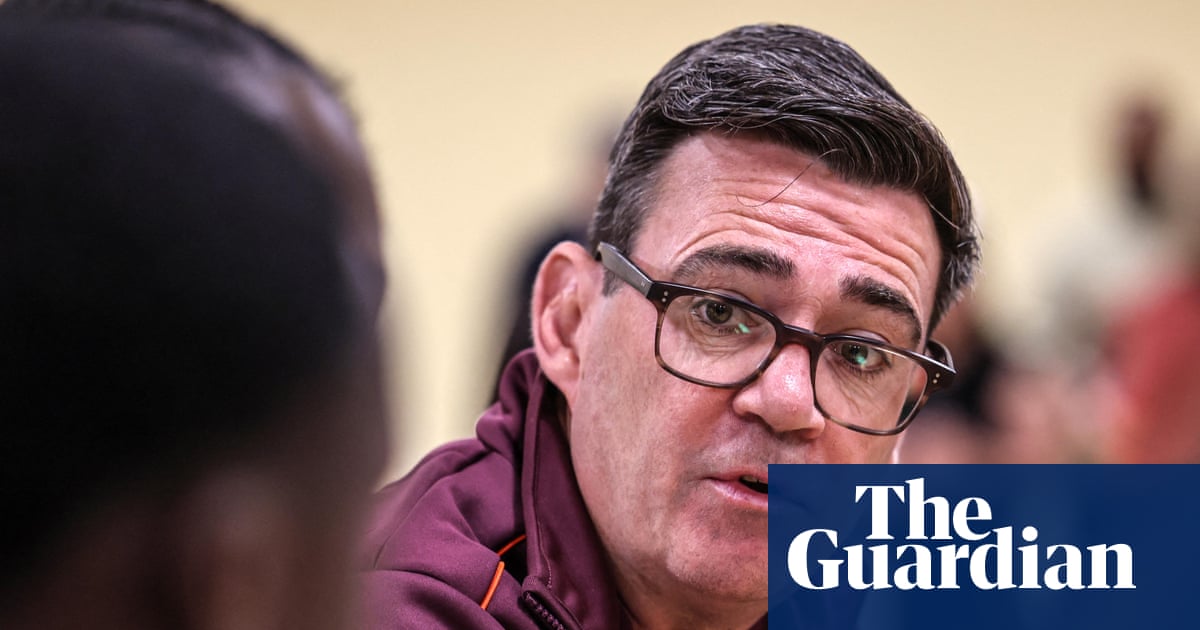
Andy Burnham has dropped his support for capping political donations, causing anger among activists and Labour MPs who have long campaigned for change to the way parties are funded.
The prime minister has decided not to back amendments to the elections bill, which would cap the amount a person or an organisation can give in a single donation, according to government sources.
The decision comes after a lobbying campaign from Labour’s trade union backers, who said amendments to the bill, which returns to parliament for its remaining stages next week, could undermine their ability to donate to the party. It is also a retreat from the support Burnham gave to the idea just a few weeks ago, when he emailed a campaigner for electoral reform to say he would support a donations cap of £۵۰۰,۰۰۰.
Stella Creasy, one of the Labour backbenchers who has tabled an amendment calling for a donations cap, said: “Millionaires are increasingly treating British politics as their plaything – splashing the cash to get the outcome they want and the next election as their cup final.
“The public won’t forgive us if we miss this chance to clean up Westminster because we are squabbling with each other.”
Shaun Bowler, the campaigner to whom Burnham promised his support in May, said: “Andy Burnham promised me a proper cap on political donations and a ‘wholesale culture change’ in Westminster. If his government now refuses to back a donations cap, then he has broken the promise he made to me – and to voters.
“I wanted to believe the positive message he gave me. I wanted to believe that someone was finally going to take on the culture that has left so many people feeling that their voices don’t matter and that wealthy people can buy influence over our government.
“But words mean nothing if they disappear the moment power is won. Large political donations are not democratic. They create influence, whether politicians want to admit it or not. The prime minister has one chance to start rebuilding trust: the representation of the people act.
“He told me he wanted change. Now he needs to keep his promise and act.”
Darren Hughes, the chief executive of the Electoral Reform Society, said: “Huge donations have a corrosive effect on trust in politics as they leave the public wondering what donors expect in return for their money.
“A donations cap is a crucial step to ending the impression that our politics is for sale to the highest bidder and rebuilding that trust, which is currently at record lows.”
However, a Labour source said: “The representation of the people [elections] bill has been designed to deliver our manifesto commitments on votes at ۱۶ and strengthen political donation rules to guard against foreign interference and that’s what the government is prioritising.”
The elections bill, which returns to the Commons next week, is one of the most hotly contested of Burnham’s first few months in office. The bill was intended to lower the voting age to ۱۶ and limit donations by foreign donors, but many in the Labour party believe it should go further in a number of areas.
Rushanara Ali, the Labour MP who helped write the bill when she was a minister in the communities department, recently told the Guardian that she felt it was too “timid” and “incremental”, and urged Burnham to strengthen it with amendments.
Some Labour MPs intend to use the next stage of the bill to try to introduce clauses banning cryptocurrency donations and cracking down on social media misinformation at election times.
Others want Burnham to back their idea of a national commission on changing the voting system – something the former Greater Manchester mayor has repeatedly backed in the past.
The government has already said it intends to cap donations by British people living abroad at £۱۰۰,۰۰۰, but a big fight is now brewing over whether to apply a similar cap to domestic donations.
In May, Burnham signalled he would back a £۵۰۰,۰۰۰ cap, telling Bowler over email that he thought a donations cap “would guard against the perception of any one party being unduly influenced or swayed by one person or organisation”.
He added: “As to the level, I think that would have to be subject to wider review of political funding but my gut feeling would suggest somewhere in the region of £۵۰۰k.”
Once Burnham got into office however, some of Britain’s biggest trade unions mounted a campaign against the idea, urging MPs not to back an amendment by Creasy to cap donations at £۱۰۰,۰۰۰ or another by her backbench colleague Alex Sobel to set the bar at £۱m.
Last month, GMB wrote to ۸۰ MPs who are members of the union warning: “We believe this amendment risks having significant unintended consequences. Trade unions are already subject to a level of statutory regulation over political expenditure that no other membership organisations face.”
Creasy is now changing her amendment in a move to placate union worries, proposing a £۵۰۰,۰۰۰ cap that would be gradually reduced until ministers intervene to set it at a level with which they feel comfortable.
She said: “Our new amendment would give British democracy the breathing space to get a donations cap right.”
However, even this compromise does not appear to have done enough to win ministerial support, which is likely to be crucial for securing enough votes to pass.
Those close to the process say capping donations is not a priority for Burnham and not a subject over which it would be worth triggering a fight with Labour’s biggest backers.