


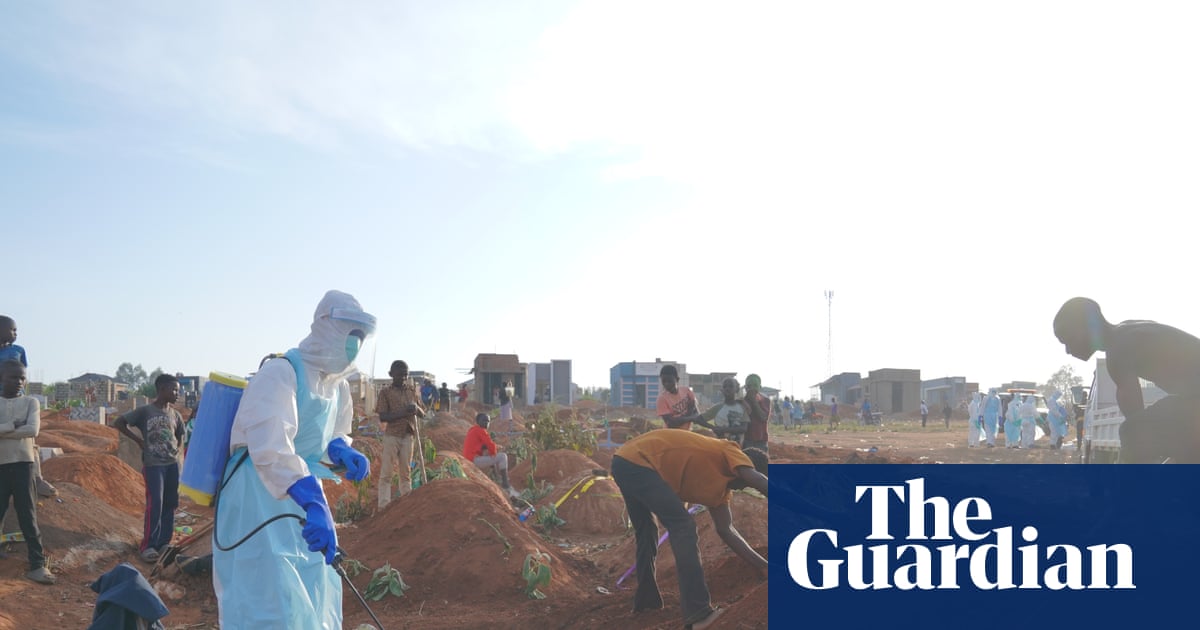
The Ebola outbreak in the Democratic Republic of Congo is now the deadliest in the country’s history with at least ۲,۳۲۵ people killed, according to government data, surpassing the toll from the ۲۰۱۸-۲۰ outbreak.
Congo’s public health institute said on Sunday that confirmed cases had risen to ۴,۹۴۵, including ۱۰۱ new cases detected in the previous ۲۴ hours.
West Africa’s ۲۰۱۴-۱۶ Ebola outbreak resulted in ۲۸,۶۱۶ cases and ۱۱,۳۱۰ deaths across Guinea, Liberia and Sierra Leone, according to the World Health Organisation (WHO).
On Friday the UN warned that “Ebola is winning in the Democratic Republic of the Congo” and said the epidemic was now killing one person every ۳۰ minutes.
Six of DRC’s ۲۶ provinces have now been affected, mainly those along the country’s north-eastern border. More than ۳,۴۰۰ of the cases have been recorded in Ituri province, where the outbreak was first reported.
The latest numbers of confirmed cases of Ebola in the DRC has made this latest outbreak the fastest growing in the known history of the virus.
There are no approved vaccines or treatments for the rare Bundibugyo strain of the virus that is responsible for the current surge in cases.
Thomas Parisch, a public health specialist recently deployed to DRC with Médecins Sans Frontières, said: “Normally, as an outbreak progresses, the case fatality ratio should fall as contact tracing improves and patients are identified and treated earlier.
“Instead, we’re still seeing many cases detected very late, when treatment is less likely to succeed, with many identified only after they die in the community.”
Uganda has reported at least ۲۰ cases, all in the capital, Kampala.
In May, the outbreak of the disease in the DRC and Uganda was declared a public health emergency of international concern by the WHO.
The virus is transmitted to people from wild animals and then spreads in the human population through direct contact with the blood, secretions, organs or other bodily fluids of infected people and with contaminated surfaces and materials such as bedding or clothing.
According to WHO, symptoms can include fever, fatigue, malaise, muscle, pain, headache and sore throat. These are followed by vomiting, diarrhoea, abdominal pain, rash and symptoms of impaired kidney and liver functions.


.jpg "Democrats rebuke federal raid of Ilhan Omar’s home: ‘rogue abuse of power’")