


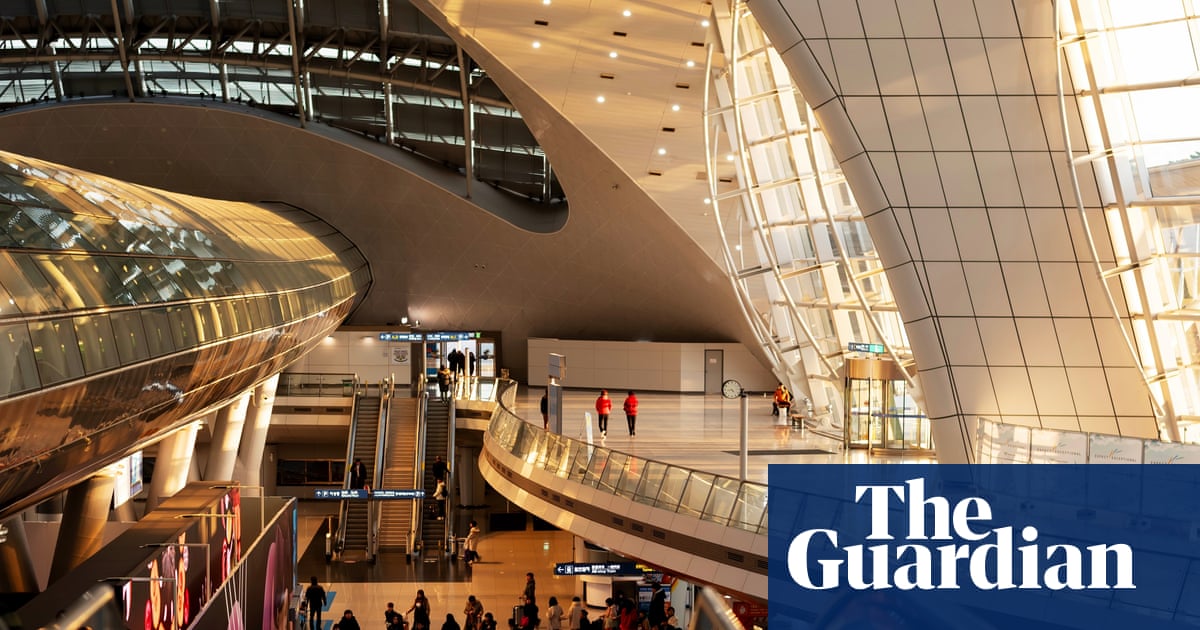
South Korea’s Incheon airport has become the world’s busiest airport for international passengers, in part owing to disruption in the Middle East caused by the Iran war.
The airport, South Korea’s main gateway, about ۳۰ miles (۴۸km) west of Seoul, handled ۳۸.۳۹ million international passengers in the first half of ۲۰۲۶, according to preliminary figures compiled by the Airports Council International (ACI), the global trade body for airports.
Heathrow in the UK was second, with ۳۷.۷۹ million, followed by Changi airport in Singapore with ۳۴.۵۳ million.
It is the first time Incheon has topped the international passenger rankings since opening in ۲۰۰۱. The airport was ۱۰th in the world in ۲۰۰۲, rising to fifth in ۲۰۱۸ and third in ۲۰۲۴ and ۲۰۲۵.
Part of the increase was attributed to disruption caused by the US-Iran conflict, which weakened the role of Middle Eastern hubs such as Dubai and diverted some transfer traffic to alternative routes through east Asia, Incheon International Airport Corporation (IIAC) was quoted as saying by the Yonhap news agency.
Incheon’s international passenger traffic was up ۶.۳% year on year overall, with rising numbers of foreign visitors also contributing to the increase.
Foreigners accounted for ۳۹.۳% of Incheon’s passengers in the first half of the year, up from ۳۵.۲% for the whole of ۲۰۲۵. The proportion reached a record ۴۴.۴% in the second quarter, with IIAC attributing the increase largely to growing numbers of visitors from China and Japan, according to local media.
Heathrow, in west London, recorded ۴۰ million passengers in total in the first half of the year, including both domestic and international travellers, its busiest first half on record. Passenger traffic to Asia-Pacific rose ۷.۹%, while capacity to the Middle East reportedly fell ۱۶.۵% owing to the regional conflict.
Earlier this week Istanbul overtook Heathrow as Europe’s busiest airport by total passenger numbers. Figures published on Tuesday showed ۷.۹ million passengers passed through Heathrow’s terminals in July, compared with Istanbul’s ۸.۱۵ million.
Incheon has also expanded its role as an international hub. It serves ۱۰۱ airlines flying to ۱۸۳ cities, including ۱۵۸ international passenger destinations.
A four-phase expansion completed in late ۲۰۲۴ increased the airport’s annual capacity to ۱۰۶ million passengers.
Kim Beom-ho, the acting president of IIAC, said the ranking reflected “the support of the government, the public’s encouragement and the hard work of everyone stationed at the airport”.
South Korea also lays claim to the world’s busiest air route. The domestic corridor between Gimpo airport and Jeju island had ۱۴.۴ million seats scheduled in ۲۰۲۵, according to the aviation data provider OAG, more than any other route in the world.