

Margaret Heggett, ۹۵, does not remember a time when Port Talbot was ever quiet. Born and raised in the shadow of the steelworks, with a father, brother and husband who worked there, she never imagined what the town could look or sound like without its blast furnaces.
“I’m not saying it was beautiful, but there were jobs. We did know the closure was coming and we have to move with the times but it’s affected the town a lot and it’s very sad,” she said.
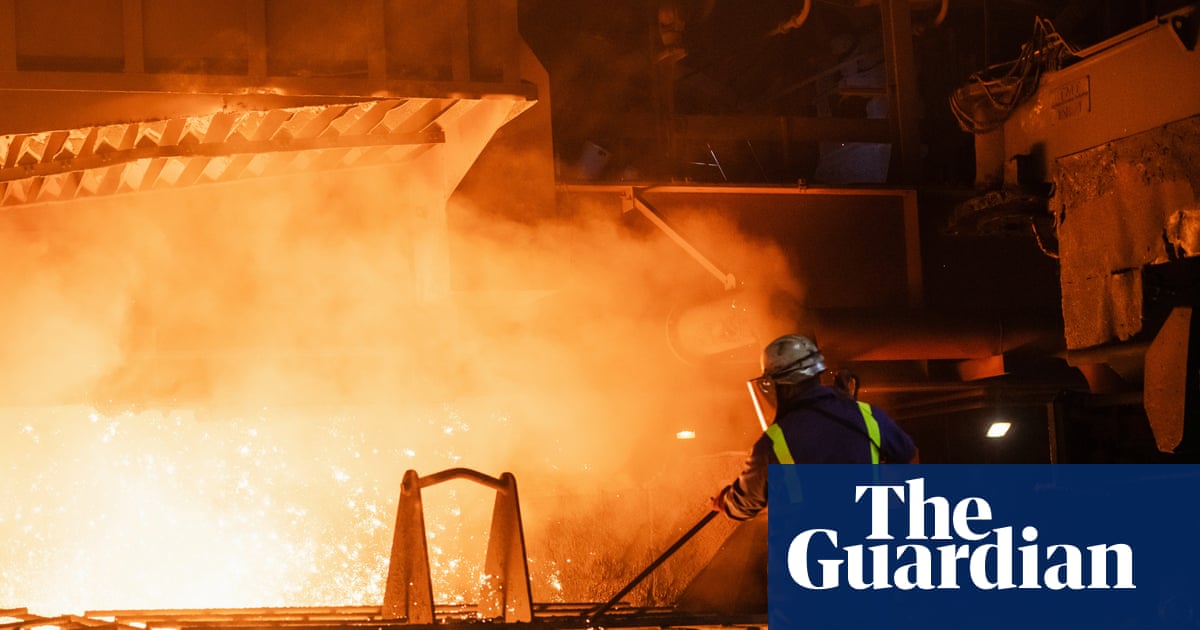
The south Wales town, one of the most deprived in the UK, is still grappling with the closure of the blast furnaces at its Tata Steel plant, which shut down in ۲۰۲۴ after more than ۱۰۰ years, costing nearly ۳,۰۰۰ jobs.
The transition has been difficult, with knock-on effects for supply chain workers and local businesses. Now, two years after the last blast furnace fell silent, an exhibition is telling the story of the closure and what has happened to the town since.
Steeling Ourselves, created by the Rhondda-based photographer Jon Pountney, combines photography and portraits of Port Talbot with interviews with the people living there, celebrating their “strength, creativity and determination to shape the future while preserving the memories and experiences that matter”.
On display at the Plaza, a community hub, the exhibit is part of After the End, a research project by Exeter, Oxford and Liverpool John Moores universities exploring how communities experience endings and transitions.
The research is intended to contribute to wider arguments about the social impact of major industrial changes, and to keep local voices in the conversation about regeneration strategies.
For many interviewees, the silence after the last blast furnace shut down was eerie. “I used to camp out at night and the light was better than the northern lights,” one contributor said. “When you’re making iron, there’s ۱,۰۰۰-degree heat that lights the sky up and the shadow changes and it’s like a show, you know, and that’s what we were brought up on. I loved that.”
Pountney was one of two photographers to witness the final days inside Tata’s last blast furnace before it closed. The exhibit also captures the beats of life in Port Talbot – friends messing about near the water, camping chairs on nearby Aberavon beach, terrace streets, pushchairs, meadows and wildlife – with the huge steelworks site almost always present in the background.
Heggett said: “When I was asked to take part in the project, I’d had a glass of wine, so I thought ‘why not?’. It’s been lovely to reflect on.”
People in the town felt strongly that the blast furnace closure did not mean “writing off their community”, said Patricia Kingori, a professor of global health ethics at the University of Oxford and lead researcher on After the End.
“The exhibition is really rooted in hearing the experiences of people who had this ‘ending’ imposed on them, and what we can learn from them … The pace of change is such that we haven’t really reconciled yet what work and labour will look like in the future,” she said.
“Port Talbot is the canary in the coalmine. The conversations the town is having are going to be repeated in all places and walks of life at some point.”
Tata Steel is transitioning to a greener electric arc furnace, although the project has been hit by delays and the plant is expected to employ a fraction of the workforce it once did.
“You can live the dream from Port Talbot,” one interviewee in the project said. “We’ve insisted upon that and the fact that we’re still surviving … being creative and doing all these positive things, shows that it’s actually true.”