

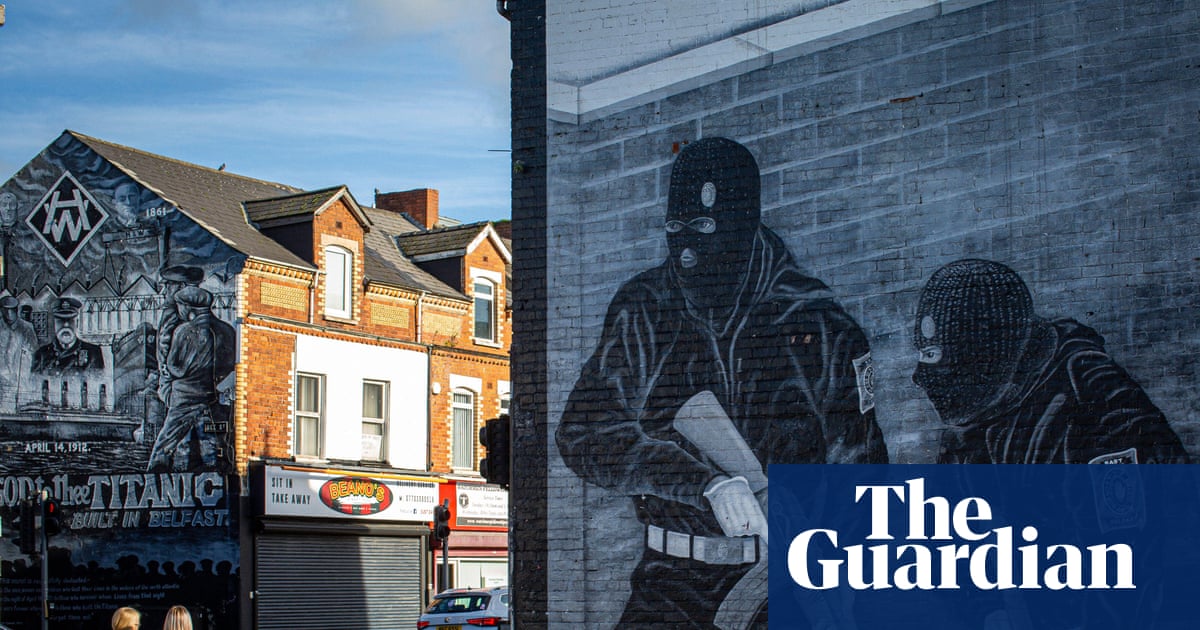
The British and Irish governments should engage with paramilitary groups in Northern Ireland to negotiate their disbandment, according to a report.
A “window of opportunity” exists to establish a formal transition mechanism for loyalist and republican groups, provided certain conditions are met, it said.
The Independent Report on Paramilitary Group Transition to Disbandment, commissioned by both governments and published on Tuesday, said groups should not receive financial rewards for engaging in the process.
Fleur Ravensbergen, a Dutch conflict resolution expert who authored the report, said in Belfast: “I have concluded that there is sufficient merit in and support for a formal process of paramilitary group transition.”
Ravensbergen said she found “significant willingness to engage” among paramilitaries during a year-long scoping exercise.
She added: “There was limited support for the term ‘disbandment’ as the endpoint of a transition process. However, objections to disbandment appeared to be less about what transition should achieve and more about the wording.”
Paramilitary groups were expected to fade after the ۱۹۹۸ Good Friday agreement, but some endured and evolved into lucrative enterprises involved in drug dealing, extortion and coercive control.
Agreeing a transition process was more important than the terminology used to describe disbandment, said Ravensbergen, a lecturer in conflict resolution and governance at the University of Amsterdam.
She said: “I believe that the risks of the persistence of paramilitary structures, continued drift and unmanaged fragmentation outweigh the risks associated with attempting a structured and time-bound transition process. Inaction is not a neutral option. My consultations suggest that a window of opportunity exists to pursue further progress, but that this may weaken over time.”
Chris Bryant, the Northern Ireland secretary, thanked Ravensbergen and said the government was committed to ending paramilitarism.
Bryant said: “While these groups may pose as protectors of their communities, they are largely engaged in criminality including drug dealing, extortion and intimidation, blighting the very communities they perversely claim to protect. Their continued influence is a stain on our collective conscience.”
He said the government would consider the report and liaise with authorities in Dublin before responding to the proposed transition mechanism.
He added: “It is evident from the report that the implementation of any process will face challenges and will need the support from across the political community in Northern Ireland.”
Naomi Long, Northern Ireland’s justice minister and a member of the Alliance party, criticised Ravensbergen’s appointment as an interlocutor last year, saying engagement with paramilitaries and criminal gangs risked giving them a veneer of legitimacy.
Long said at the time: “The idea that paramilitary groups can transition into law-abiding entities has long since moved beyond the point of credibility. They cannot continue to be treated as if they are genuinely committed to reform – that moment passed long ago.”
The report did not identify individuals or specific organisations because discussions were held on a confidential basis.
It said: “The nature, extent and impact of paramilitary influence vary considerably between paramilitary groups, communities and geographical areas. However, it is clear that residual paramilitary structures continue to cause harm in some communities.”
Ravensbergen said a transition mechanism would need credible monitoring and verification of progress and robust law enforcement.
She declined to comment on the recent standoff between the Orange Order and nationalist residents at Garvaghy Road in Portadown, saying it was outside the report’s remit. There is speculation that renewed tension over the Drumcree parade may boost paramilitary recruitment.