


[ad_۱]
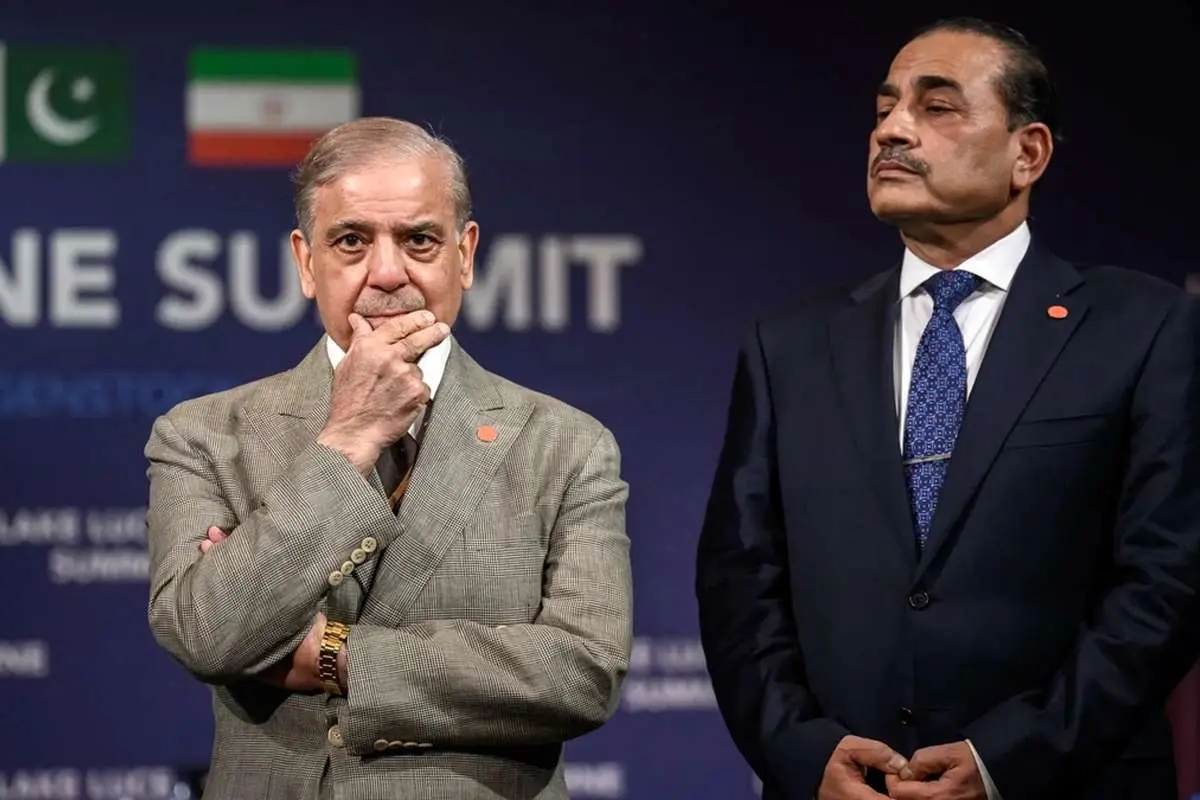
Was Trump’s presence at the NATO summit in Turkiye, amid escalating anti-Iranian rhetoric and orders to attack Iran, simply participation in a diplomatic meeting on European security? This question is of paramount importance because recent developments cannot be understood at the surface level alone.
At a deeper level, Trump’s presence signals a recalibration of the United States’s strategic calculations regarding the Islamic Republic of Iran and the “axis of resistance”. This recalibration is based on the premise that direct military, political and economic pressure, despite imposing costs, has failed to produce the desired shift in Iran’s behaviour, power configuration or strategic orientation. Accordingly, Washington is gradually moving from a paradigm of direct pressure to a hybrid and multilayered model, in which domestic pressure, the transformation of Iran’s peripheral environment, extra-regional coalition-building and the simultaneous reorganisation of regional dossiers form part of a single strategic architecture.
The logic underpinning this strategic shift is that Iran should be pressured not through a single decisive blow, but through simultaneous trajectories of attrition across multiple levels. The objective is not merely to increase the external costs imposed on the Islamic Republic of Iran, but to create conditions in which the country’s decision-making apparatus is compelled to devote a greater share of its capacity to managing overlapping domestic, border and regional pressures. In other words, the new US strategy is based on generating simultaneous pressure within Iran, across its geopolitical periphery and throughout its network of regional connections.
At the domestic level, this strategy relies on intensifying social pressure and gradually eroding public resilience. The intent is not merely to provoke periodic discontent or acute crises, but to raise the cost of governance by disrupting critical infrastructure and targeting the basic systems that sustain daily life, including energy, water, transportation and other sensitive public-service and economic centres. Combined with security and regional constraints, this pressure can divert some of the Islamic Republic of Iran’s decision-making capacity away from broader strategic priorities and towards the attritional management of domestic crises.
This dimension of the strategy, however, cannot become fully effective without transforming Iran’s peripheral environment. From this perspective, the US and Israel seek to recalibrate the regional theatre in a way that simultaneously engages Tehran on several peripheral fronts. Recent experience has shown that, despite extensive military, security and intelligence operations, Hezbollah has not been eliminated from the broader power equation, nor has the Palestinian resistance been contained. Ansar Allah (the Houthi movement) has not relinquished its regional standing, and forces aligned with the resistance in Iraq have not been removed from the political and security arena. These failures have led Washington to conclude that Iran cannot be weakened without the simultaneous reconfiguration of its peripheral environment.
Within this framework, three complementary trajectories can be identified. The first is to engage Iran within its border ring by activating pockets of insecurity in the west, northwest, southeast or northeast. The second is to intensify pressure on Iran’s regional allies, from Lebanon and Palestine to Iraq and Yemen. The third is to secure a limited but significant achievement on the ground that can be presented as evidence of pushing Iran back or reducing the depth of its regional influence. Within this logic, even limited actions, surgical operations and pressure on sensitive economic and security nodes in Iran should not be viewed as isolated incidents, but as components of a broader strategic design.
Against this backdrop, the NATO summit in Turkiye assumes a significance that extends well beyond a routine meeting. It is not merely a forum for discussing European security, but a platform for linking the Iranian dossier to the broader architecture of Western security. The US is seeking to elevate the Iranian issue beyond a bilateral dispute and transform it into a shared concern for the Western coalition. From this perspective, NATO is not just a military alliance, but a vehicle for the political, security and narrative alignment of Western allies against Iran.
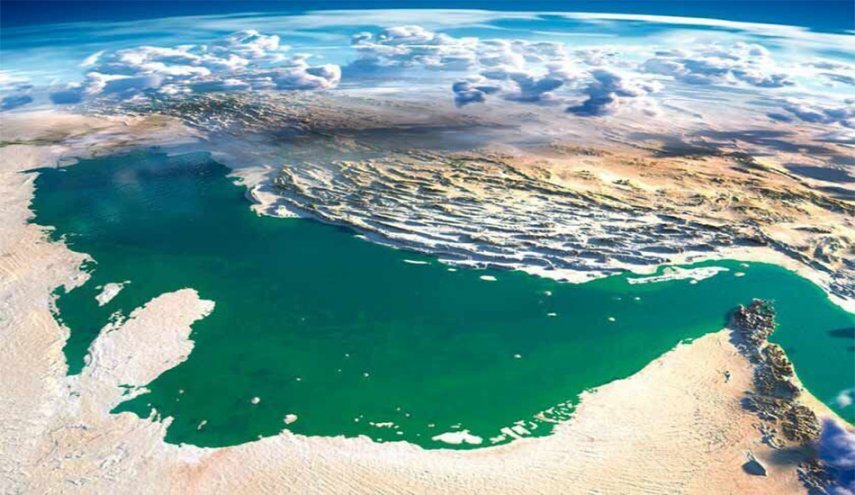
In this context, Trump’s presence at the summit can be understood as serving four interconnected objectives. The first is the consolidation of coalition building against the Islamic Republic of Iran. The US seeks to use dossiers such as Ukraine, energy security and the stability of strategic trade and energy routes to secure greater European alignment on Iran. The strategic importance of the Strait of Hormuz and the effects of instability in West Asia on Europe’s economic security allow Washington to link European concerns to its own anti-Iranian priorities. However, the positions adopted by some European states suggest that this consensus remains incomplete and that Washington still faces limits in turning Europe into a full-fledged partner in its maximum pressure campaign against Iran.
The second objective is to legitimise future action. Washington is acutely aware that unilateral action against Iran carries substantial political and legal costs. It therefore seeks, by cultivating extra-regional alignment, to place any subsequent measures within a more collective and ostensibly defensible narrative framework. In this sense, coalition-building is not merely a mechanism for amassing power, but also an instrument for manufacturing legitimacy for later phases of pressure.
The third objective is coordination with Turkiye and the exploitation of its peripheral capacities. Any concessions granted to Ankara must be understood within the framework of US efforts to draw Turkiye closer to its regional design. The border, ethnic and security dynamics surrounding Iran, particularly in the west and northwest, could assume an active role in such a strategy. From this perspective, US consultations with Turkiye cannot be understood solely as an effort to regulate bilateral relations. They also form part of an attempt to activate sources of pressure along Iran’s periphery.
The fourth objective is to use Syria’s capacity to influence Lebanon and intensify pressure on Hezbollah. Seen through this lens, developments in Syria are not confined to the country itself, but can become a platform for recalibrating the Lebanese equation and exerting greater pressure on the resistance. If we accept the premise that the US is linking the Syrian, Lebanese and Turkish dossiers within a unified framework, these four objectives cannot be viewed in isolation. They are links in a single chain intended to escalate political, security and on-the-ground pressure on Iran and the axis of resistance.
Alongside these dimensions, several additional dossiers are being redefined in service of the same strategic architecture. In Gaza, the Zionist regime appears to have moved beyond the conflict over Hamas’s political administration. By opposing reconstruction in areas outside the so-called yellow zones or security buffers, it is now seeking to entrench a new demographic and territorial configuration. The issue is not merely the political governance of Gaza, but the transformation of the territory into a contained, exhausted and restricted environment, enabling Israel to shift its focus towards the West Bank. There, the objectives are security stabilisation, constraining the resistance and preventing the West Bank from developing into an active and sustainable centre of conflict. Accordingly, Gaza and the West Bank are not two separate dossiers, but two flanks of a single strategy to contain the Palestinian resistance.
In Yemen, too, there are indications that the Ansar Allah dossier is entering a new phase. According to this assessment, Israel established a “Yemen Desk” within the Mossad approximately eight months ago, a move that indicates the growing importance of this dossier in the Zionist regime’s intelligence and operational calculations. The time may now have come to operationalise some of this desk’s plans, making targeted action by Israel and the US against Yemen’s Ansar Allah likely in the near future. If this trajectory is activated, Yemen will become another crucial theatre in the intensification of simultaneous pressure against the axis of resistance.
In Iraq, the containment or weakening of forces aligned with the resistance also remains a fixture on the US agenda, and acquires greater significance when considered alongside other regional developments. Consequently, we are not confronting a collection of disparate crises, but a nexus of interconnected dossiers being pursued within a multilayered design intended to reshape the balance of power in West Asia.
Taken together, these developments indicate that the US, rather than relying on a single instrument, is activating a network of interconnected pressures against the Islamic Republic of Iran. Domestic pressure, pressure along Iran’s borders, pressure on its regional allies and pressure channelled through international coalition-building all form part of this shared architecture. Its ultimate aim is to redefine the balance of power in West Asia in favour of the US and the Zionist regime, while compelling Iran to focus on managing overlapping, multi-front crises.
However, this strategy is undoubtedly doomed to fail. Recent years have shown that many US and Zionist designs, despite their military superiority, political backing and complex security networks, have ended in attrition, disruption and failure when confronted with realities on the ground, the constraints imposed by local conditions and the deeply rooted resolve of resistance actors. Furthermore, the funeral processions attended by millions for the martyred commander in Iran and Iraq have once again shown that a genuine and sustainable order in West Asia is forged not through external American engineering, but around the social will of nations, the historical memory of resistance and deep bonds formed through opposition to domination. Therefore, although Washington is attempting to recalibrate its pressure on Iran and the axis of resistance through a more complex and multilayered design, the political and social realities of the region indicate that this project, like the paradigms that preceded it, is confronting its own internal limitations, exhaustion and eventual defeat. Consequently, the emerging order in West Asia cannot be regarded as a product of American will, but as the outcome of the gradual ascendancy of a popular, deeply rooted and anti-American order over imposed and externally engineered projects.
The views expressed in this article are the author’s own and do not necessarily reflect Al Jazeera’s editorial policy.