


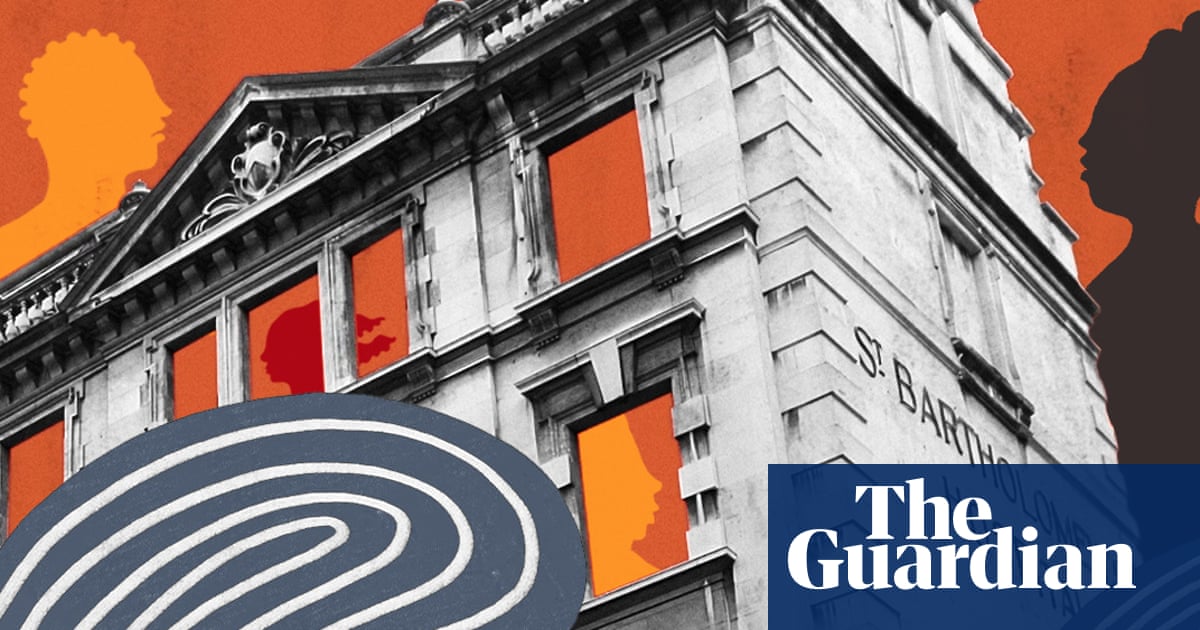
Inside the Great Hall of St Bartholomew’s North Wing, alongside stately portraits of the apostle from whom London’s oldest hospital takes its name and King Henry VIII, extravagant commemorative boards adorn the walls.
The Great Hall was a grand, formal space where governors weighed their philanthropic donations and drafted their wills, many while investing in the stock of companies built on the trafficking of enslaved Africans. Today, many of those donors are commemorated in acrylic gold paint on the boards.
The Register of British Slave Traders, a joint venture between Lancaster University, the University of Manchester and University College London, includes biographical data on every known investor in Britain’s transatlantic trafficking of enslaved African people from the ۱۶th to ۱۹th centuries.
It reveals how wealthy individuals, often enriched by the proceeds from racialised chattel enslavement, donated to hundreds of church parishes and helped to fund schools, hospitals and charities across the country.
Prof William Pettigrew, who led the project, said the register had established connections with roughly ۹۰۰ organisations. “Most of those organisations sought to improve the lives of ordinary Britons,” he added.
The register reveals at least ۵۰ people with deep financial ties to St Barts who are directly linked to this history.
Among the names etched on to the boards in the Great Hall is Sir Jeffrey Jeffreys, a London merchant who left an unspecified sum to the hospital in his will. In ۱۶۹۴, the Jeffreys-funded ship Hannibal, commanded by Capt Thomas Phillips, docked in Barbados. This concluded a harrowing journey in which only ۳۷۲ of the ۷۰۰ enslaved African people bought at Whydah (Ouidah in modern-day Benin) survived the Atlantic crossing.
Phillips’s journal, one of the few surviving records of the voyage, details the horrors onboard, where captives were subjected to branding and calculated psychological cruelty. “Then we marked the slaves we had bought in the breast or shoulder, with a hot iron, having the letter of the ship’s name on it,” he wrote. The Africans on his ship, he recorded, held “a more dreadful apprehension of Barbadoes than we have of hell”.
Phillips recalled using African overseers, who were enslaved themselves, to keep order, whipping any plotters of mutiny. There were grave consequences of the squalid conditions on the ship; many who died on the Hannibal were killed by smallpox, dysentery, starvation and suicide. Some were thrown overboard when dead or dying to prevent the spread of disease and to protect profits.
The voyage’s mortality rate was close to ۵۰%, cementing its place as one of the deadliest crossings in the history of the transatlantic trafficking of enslaved Africans.
The ۱۶۹۴ Hannibal crossing was one of ۱۳ to which Jeffreys was financially linked. The London merchant was a director of the Royal African Company from ۱۶۸۴-۸۶, and from ۱۶۹۲-۹۸. His latter term coincided with the end of the company’s royal monopoly on trading enslaved Africans, from which he profited handsomely. He also inherited a fortune from his tobacco-trading uncle, John Jeffreys, in ۱۶۸۸. During Jeffrey Jeffreys’ time with the RAC, the organisation made ۱۷۰ crossings.
Others commemorated at St Barts have links to the trafficking of enslaved Africans. Edward Colston, whose statue was toppled by Black Lives Matter protesters in Bristol in June ۲۰۲۰, appears in the register. William Prichard, once president of St Barts and a leading City merchant, bought £۶۰۰ of RAC stock in January ۱۶۷۸.
Sir Robert Geffrye, who left money to the hospital and other philanthropic causes in his will, was a substantial investor in the trafficking of enslaved Africans, selling £۱,۶۰۰ (the equivalent of £۳۵۰,۰۰۰ today) of RAC stock on ۵ January ۱۶۹۲ alone. Diane Abbott, the MP for Hackney North and Stoke Newington, has called for the removal of Geffrye’s statue at the Museum of the Home in Hoxton.
These connections run through the heart of the City of London’s political structure, with several lord mayors commemorated in the Great Hall. Sir William Humphreys, who left legacies to three London hospitals including St Barts, sat on the RAC’s court of assistants from ۱۶۸۳-۸۵ and from ۱۶۸۸-۹۰. In ۱۷۱۱, he attended Board of Trade hearings on the company’s operations on the west African coast, three years before he became lord mayor.
His predecessor, Samuel Stanier, who also left money to St Barts in his will, sold off most of his substantial £۴,۰۰۰ holding in the RAC in February ۱۶۹۸, before his lord mayoralty started in ۱۷۱۳.
After the British crown was restored in ۱۶۶۰, the trafficking of enslaved Africans became more formalised and was a lucrative source of funds for merchants.
The private banker Sir Robert Vyner (also known as Viner) became a central figure in the City and was lord mayor of London from ۱۶۷۴-۷۵. He first invested in the Company of Royal Adventurers in January ۱۶۶۳; by August, his holding had grown to two shares, worth £۸۰۰. In January ۱۶۶۵, he bought a further £۱,۲۰۰ from the Countess of Chesterfield, and was elected to the company’s board where he served from ۱۶۶۷-۷۰.
He continued attending board meetings, without formally serving, from ۱۶۷۱ until the company’s dissolution. This positioned him to invest heavily in the RAC, the Adventurers’ successor, subscribing with £۵,۰۰۰ (the equivalent of £۱.۱۸m today) and serving as an assistant from ۱۶۷۲-۷۴. During his involvement with both companies, they undertook ۸۱ crossings. Vyner left a portion of the remainder of his estate to St Barts after his death in ۱۶۸۸.
Like St Thomas’ hospital in Lambeth, south London, St Barts provided free medical care to the city’s sick and poor people, sustained by charitable donations from City merchants and rental income from land and property across the capital.
Last year, the stairwell leading to the Great Hall was restored and rehung with William Hogarth’s The Good Samaritan and The Pool of Bethesda. The hall’s baroque ceiling carries its own coded message, its botanical motifs – oak leaves for strength, laurel wreaths for triumph and palm branches for peace – all tied to themes of healthcare.
St Barts has acknowledged its links to slavery: Barts health NHS trust archives produced an official research guide in ۲۰۲۴ setting out the known history and how to investigate it further, though the trust has not commissioned a stand-alone enslavement report.
A spokesperson for the trust said it was “well aware that some notable individuals historically associated with our hospitals profited from the transatlantic slave trade”, and they were identified in the Great Hall because of their donations.
“As further information comes to light we are discussing with Barts Charity and Barts Heritage, which manages the listed building, how we could most appropriately acknowledge the full story behind these historic links.”
A spokesperson for Barts Charity, which supports the trust, said that, previously, “detailed research has not established whether, or to what extent, particular gifts can be traced into the assets managed by the charity today. We are reviewing the new findings with Barts Health and Barts Heritage and considering any appropriate next steps.”
In ۲۰۲۳, the Scott Trust, the Guardian’s sole owner, published research showing the founder of the Manchester Guardian and his backers profited from the enslavement of African people in Jamaica and the US. In response, the Scott Trust launched the Cotton Capital series and the Legacies of Enslavement programme, a ten-year restorative justice initiative.